












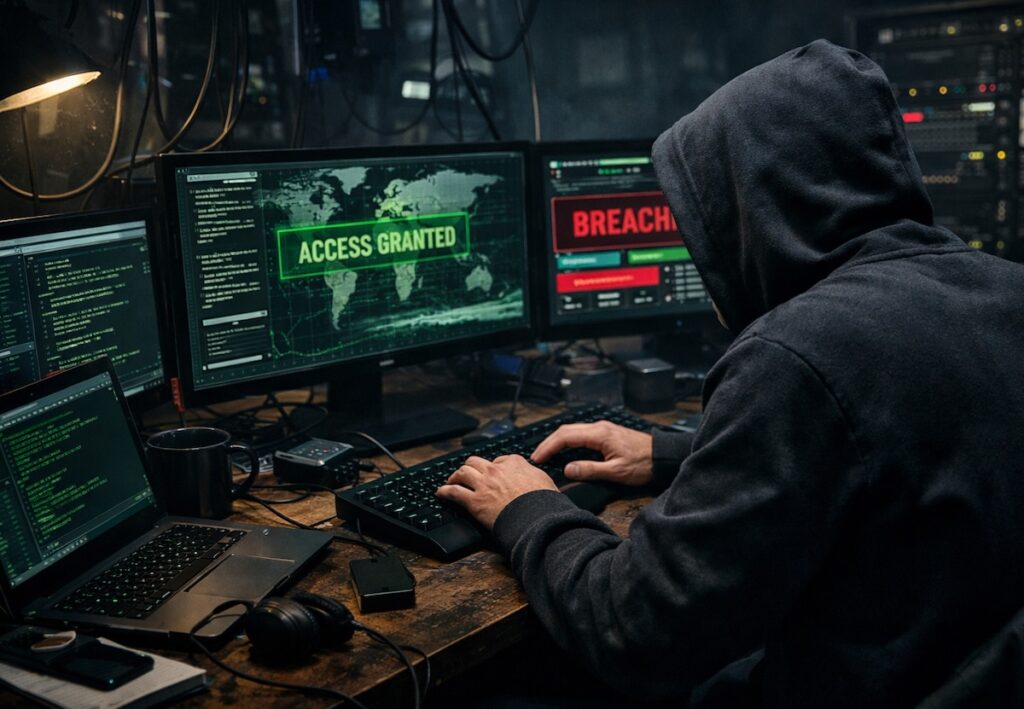
This isn’t exactly dripping in celebrity drama, but honestly, it’s so unsettling that you need to know, anyways. And yes, even the most glam among us are not immune.
The National Security Agency (AKA the NSA) has stepped forward with a new warning about Wi-Fi that is making the rounds online this week. And sadly, it feels less like a helpful suggestion and much more like a flashing red alarm: Americans are increasingly at risk of cyber attacks right from inside their own homes.
What?!
That’s right. Your home Wi-Fi network — ya know, the place where you stream your guilty pleasures, shop, text, and maybe even work — could be a target for hackers. According to a newly surfaced info sheet published by the agency, hackers are going after everyday people at an alarming rate to access personal, private, and confidential information. This ain’t some far-off Hollywood hacker movie plot, y’all! This is happening… now!!!
Related: Lindsie Chrisley’s BF Arrested In Georgia After Allegedly Going ‘Berserk’ & Strangling Her
The NSA didn’t just drop the warning and walk away, either. As part of the detailed cybersecurity information sheet they released, they also shared what we might as well basically see as a survival guide for the digital age. And their message is loud and clear, kicking off like this:
“Don’t be a victim! Malicious cyber actors may leverage your home network to gain access to personal, private, and confidential information. Help protect yourself, your family, and your work by practicing cybersecurity-aware behaviors, observing some basic configuration guidelines, and implementing the following mitigations on your home network, including: Upgrade and update all equipment and software regularly, including routing devices, exercise secure habits by backing up your data and disconnecting devices when connections are not needed, limit administration to the internal network only.”
That’s a lot to take in, but the vibe is unmistakable: tighten things up, and do it now.
One of the biggest takeaways? Something surprisingly simple that many people ignore: rebooting your devices. Yes, really. Turning it off and on again might actually save you. The agency explained:
“Schedule frequent device reboots. To minimize the threat of non-persistent malicious code on your personally owned device, reboot the device periodically. Malicious implants have been reported to infect home routers without persistence.”
And they didn’t stop there. The recommendation gets even more specific, and honestly, a little intense:
“At a minimum, you should schedule weekly reboots of your routing device, smartphones, and computers. Regular reboots help to remove implants and ensure security.”
“Implants.” Yikes!! That word alone is enough to make anyone uneasy. We’re not talking about sci-fi here, but very real malicious code that can sit quietly on your devices.
Related: Tiger Woods’ Formal Charges Revealed After Shocking Car Crash & Arrest!
If you thought this was all just precautionary, think again. Reports have surfaced that hackers tied to the Russian military are supposedly targeting home routers worldwide. So, this isn’t just a “be careful” moment. It’s a “wake up” moment.
And before you think you can escape the risk by working from your favorite cozy coffee shop, think twice. The NSA is basically waving a giant warning flag about public Wi-Fi, too:
“Many establishments, such as coffee shops, hotels, and airports, offer wireless hotspots or kiosks for customers to access the Internet. Because the underlying infrastructure of these is unknown and security may be weak, public hotspots are more susceptible to malicious activity.”
So, yeah, that cute café might come with a side of cyber vulnerability. The agency cautioned:
“If you must access the Internet while away from home, avoid direct use of public wireless. When possible, use a corporate or personal Wi-Fi hotspot with strong authentication and encryption.”
And if you absolutely have no choice in public, there’s still a safer way to go about it:
“If public use is necessary … if possible, use the cellular network (that is, mobile Wi-Fi, 4G, or 5G services) to connect to the Internet instead of public hotspots. This option generally requires a service plan with a cellular provider. If you must use public Wi-Fi, use a trusted VPN. This option can protect your connection from malicious activities and monitoring. Exercise physical security in the public place. Do not leave devices unattended.”
It’s a lot, we get it. But this is one of those moments where being a little paranoid might actually be the smartest move. Because the last thing anyone wants is to become the next cautionary tale. And after all, the world only ever seems to be getting crazier and crazier.
Sigh…
You can see the information sheet for yourself HERE, by the way.
[Image created for PerezHilton.com]




-
Categories