










[Warning: Potentially Triggering Content]
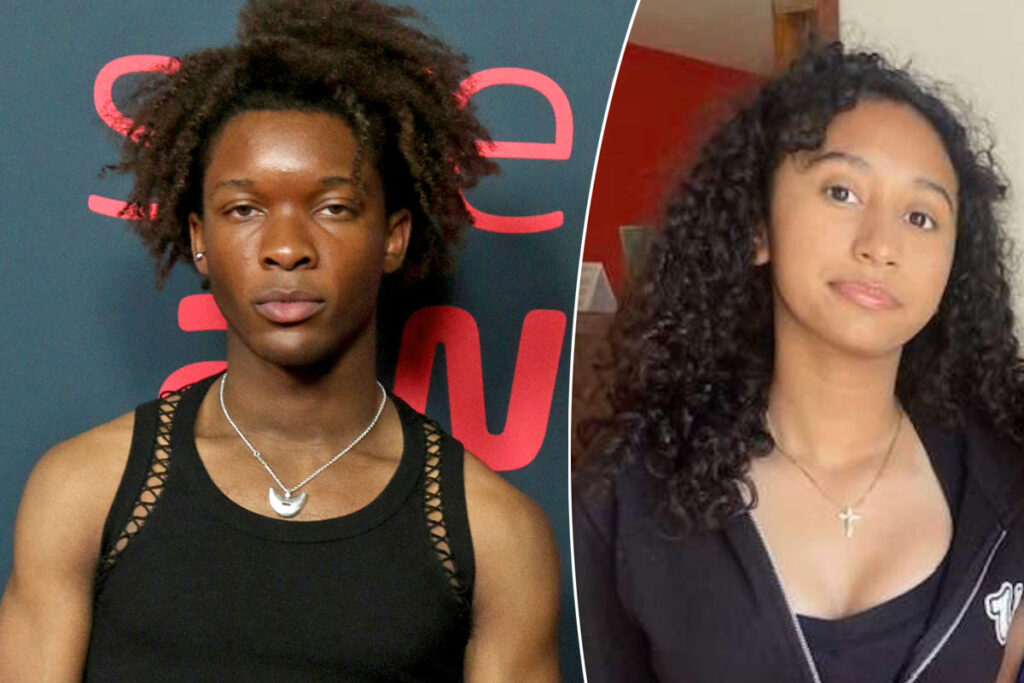
D4vd is currently behind bars after being charged with Celeste Rivas’ grisly murder, but a tiny, three-letter word in her autopsy report could result in huge complications in court.
Earlier this month, the Romantic Homicide singer was arrested and charged with first-degree murder, continuous sexual abuse of a child under the age of 14, and unlawful mutilation of human remains seven months after missing teen Celeste Rivas’ hacked up remains were discovered in the trunk of his Tesla.
In an an autopsy report obtained by TMZ last week, medical examiner determined she was killed by multiple penetrating injuries with unspecified objects — but left room for ambiguity:
“[There are] 2 penetrating wounds of the torso with smooth edges that may represent sharp force injuries. The wound — [3/4 inch length and 1.5 inches deep] — on the upper abdomen penetrates the liver and the wound on the left chest — [9/16 inch length and 2 inches deep] penetrates one of the left intercostal spaces, with disruption of the adjacent ribs’ cortical surfaces.”
The key three-letter word in the report being “may” … how significant could that uncertainty end up becoming, exactly? When it comes to the prosecution, does that sort of language weaken their case? We have EXCLUSIVE answers!
This week, Christopher Chaney, criminal defense attorney and founder of The Law Offices of Christopher Chaney, spoke EXCLUSIVELY with us about the matter:
“The use of the word ‘may’ reflects a degree of medical uncertainty. It doesn’t establish a definitive conclusion about the nature of the injuries, and that kind of ambiguity in a key report like an autopsy can become a focal point for the defense in creating reasonable doubt.”
So that could potentially be D4vd’s loophole? Well, not necessarily… Chaney revealed:
“However, this doesn’t automatically weaken the prosecution’s case. Prosecutors can still rely on the totality of the evidence, and use medical findings, witness statements, or other forensic details to support their theory.”
As we’ve been following, law enforcement officials have been carefully building their case for SEVEN months — from home raids, to interviews with D4vd’s closest confidants, to wire taps and other digital evidence allegedly connecting the singer to Celeste’s murder, according to the District Attorney’s office… So where there may be uncertainty in the medical report, there could be certainty elsewhere — that is, unless the timing of the 21-year-old’s arrest could throw another wrench. Some online have wondered if they waited too long. On that front, Chaney EXCLUSIVELY told us:
“When a significant amount of time passes between the alleged incident and the resulting charges filed, it can reflect a more deliberate investigative process. In some cases, that delay may suggest prosecutors had initial questions or gaps they wanted to address before moving forward, though that’s not uncommon in more complex cases.”
He added:
“That additional time can allow investigators to gather evidence and strengthen the case, so timing alone doesn’t necessarily indicate weakness.”
Inneresting!
If the 40 terabytes of discovery the prosecution says they have against D4vd, born David Anthony Burke, is as strong as they’re claiming, they might just have a pretty solid case. As we previously reported, the Los Angeles Police Department reportedly felt they had more than enough evidence to nail him.
We guess we’ll have to want and see how things play out in court… But for now, how does Chris Chaney’s insights make YOU feel about D4vd’s case? Let us know in the comments down below.
[Images via Esmeralda Lozano/GoFundMe & Nicky Nelson/WENN]
-
Categories